All posts by coleswildbird

The Indigo Bunting: Cole’s Bird of the Month for July

The Indigo Bunting isn’t just another pretty face in the world of birds, it’s also as upbeat and cheery as it is beautiful. The bright blue male of the species sings with gusto from sunup to sundown during the spring and summer. He loves to perch high in the trees or on telephone poles to sing out his song for the world to hear.

Indigos are small, stocky birds with thick bills. The adult males are a brilliant indigo blue all over, while the females are mostly brown with a whitish throat. They will sometimes have just a touch of blue on the wings, tail, or rump. The young males are brownish blue. Indigos are often mistaken for another striking songbird, the Blue Grosbeak; however the grosbeak is much larger and has rust colored patches on its wings. Indigos are about the size of a sparrow. Also, the Blue Grosbeak has a significantly thicker bill.

If you want to attract these brightly colored, attention getters to your backyard then fill your feeders with Niger seed or White Proso Millet. Along with seeds and berries, they love to eat insects. So, you may want to avoid pesticides to keep this food source in ample supply. If you live near a weedy or brushy area, that’s another enticement. Indigos love to forage in seed-laden shrubs and grasses.

This is the perfect time of year to watch for Indigo Buntings. They breed in late spring and summer as far west as the California border, as far north as the southern central part of Canada, and all across the Midwest and eastern United States. This time of year Indigos are found in pairs, but during the winter they travel in flocks when they migrate to Central America.

Another fun fact about Indigos is that they are known to sing as many as two hundred songs per hour at dawn and then sing about one per minute for the rest of the day. According to the Cornell Lab of Ornithology, young Indigo Buntings learn their songs from older males near the younger male’s breeding ground. This leads to “song neighborhoods” in which all nearby males sing songs that are similar to each other and that are different from those sung more than a few hundred yards away.

If you’d like to hear the songs of the Indigo Bunting, click the link below to watch the video and hear him singing.

We’d love to see your photos of Indigo Buntings and hear about your experiences attracting them. Please join the conversation on the Cole’s Facebook page by clicking the link below.

https://www.facebook.com/pages/Coles-Wild-Bird-Products-Company/125017247634656

Cole’s Wild Bird Products is a family-owned company that distributes wild bird feed and suet products. The company is known for offering the highest quality products on the market. Cole’s also specializes in chile infused seed products designed to make your feeder a bird’s only “hot” spot. Cole’s started in the garage of mom and pop entrepreneurs Richard and Nancy Cole back in the early 1980’s. Today it distributes to retailers nationwide. Cole’s is located in the metro Atlanta area. For more information, visit www.coleswildbird.com

Cole’s Bird of the Month for June: The Pileated Woodpecker

If you’ve ever been lucky enough to see a Pileated Woodpecker in the wild, chances are you remember it as an amazing sight. It’s considered one of the most beautiful of all wild birds with an almost prehistoric look.

The Pileated Woodpecker is the largest woodpecker in North America. They are about 16 inches long and roughly the size of a duck. With a bright red-capped crest and bold white stripes down its neck, the Pileated Woodpecker is truly one of the most striking creatures in the forest.

Although very noticeable when out in the open, Pileated Woodpeckers aren’t always easy to spot. They can be reclusive and do not regularly visit backyard feeders. They live in forests and love to make their homes around lots of dead trees and fallen logs. You’ll find them searching for carpenter bees and ants while drumming on trees in woodlands where they make impressive rectangular excavations that can be a foot or more long and go deep inside the wood. These birds also use their long tongues to extract wood boring beetle larvae or termites lying deep in the wood. In the video below, above you’ll see one enjoying a hearty breakfast.

Take the time to look and listen for them. They are among the loudest of birds with whinnying calls. Their drum is a deep, slow, rolling pattern. Watch the video below to see one and hear its call and its drum.

With a nesting cavity of 12-24 inches deep, these monogamous creatures prefer large trees in old forests. The male does most of the work to create the nest, but the female contributes as the nest is nearing completion.  Unlike other birds, Pileated Woodpeckers don’t line their nests with any material except for leftover wood chips. It takes about three to six weeks to complete the nest and once it’s used, Pileated Woodpeckers rarely return to it.  These birds lay from three to five eggs.

Once the nest has served its purpose for the Pileateds, it becomes a valuable commodity within the forest community. The large cavity provides shelter and nest space for many other bird species including swifts, owls, ducks, pine martens and even the occasional bat.

If you want to attract Pileated Woodpeckers, there are a couple things you can do. Make or buy a suet log and keep it well stocked with suet, especially during the winter when they are more likely to visit your feeders. Also, resist the urge to clear out old dead logs, stumps, and log piles – keeping rotten or decayed wood around is probably the best way to get Pileateds to visit. Since these magnificent creatures don’t migrate, once you do get their attention you’re likely to have made friends for a good, long while.


Please click the link below to join the conversation on Facebook.https://www.facebook.com/pages/Coles-Wild-Bird-Products-Company/125017247634656


Cole’s Wild Bird Products is a family-owned company that distributes wild bird feed and suet products. The company is known for offering the highest quality products on the market. Cole’s also specializes in chile infused seed products designed to make your feeder a bird’s only “hot” spot. Cole’s started in the garage of mom and pop entrepreneurs Richard and Nancy Cole back in the early 1980’s. Today it distributes to retailers nationwide. Cole’s is located in the metro Atlanta area. For more information, visit www.coleswildbird.com.

Things You Can Do To Help Nesting Birds

When building a nest, birds search for just the right location and the right building materials. So, if you want to help them out and attract more birds to your yard, there are a few things you can do to make them feel at home.


One – Above all, make sure your yard will be safe for birds. The last thing you want to do is attract birds and their young if there is obvious danger. Avoid using herbicides and pesticides in your yard during breeding season and keep cats indoors.


Two – Raising the young takes a lot of energy. Well placed bird feeders and a good source of clean water make it easier for stressed mommy and daddy birds to provide for their chicks.


Three – Provide various materials birds might use to build a nest and leave them in easy  to discover places. Here are some suggested materials:


Dead trees and branches (perfect for cavity nesters)

Twigs – (both rigid and flexible)  

Mud – (Robins love it)

Dry grass and straw (not treated with chemicals)

Human hair or horse hair

Pet fur (not treated with flea or tick chemical)

Moss, bark strips, pine needles, dead leaves

Snake skins (if you happen to find them)

Spider webs and caterpillar silk (provides good binding material)


Be sure to have the materials out in secure places so they don’t blow away. You can hide them in a suet cage or a mesh bag. It’s a good rule of thumb to use only natural materials and avoid things you find around the house. For instance, never put out dryer lint since it can be coated with residue from detergents.


If you really want to push the easy button, put out some ready-made bird houses. By having feeders as well as water nearby, you can significantly lessen the difficult task of building a nest and raising babies for your backyard songbirds. Having a back yard that feels safe, has plenty to eat and drink, along with a few strategically placed building materials will provide your feathered friends with everything they need right at their fingertips – or beaks as it were. Then just sit back, relax and enjoy watch this showcase of courtship, nest building, and parenting.


Cole’s Wild Bird Products is a family-owned company that distributes wild bird feed and suet products. The company is known for offering the highest quality products on the market. Cole’s also specializes in chili infused seed products designed to make your feeder a bird’s only “hot” spot. Cole’s started in the garage of mom and pop entrepreneurs Richard and Nancy Cole back in the early 1980’s. Today it distributes to retailers nationwide. Cole’s is located in the metro Atlanta area. For more information, visit www.coleswildbird.com.

The Rose-breasted Grosbeak – Cole’s Bird of the Month for May

It’s one of the most striking birds around. The male Rose-breasted Grosbeak has beautiful contrasting colors. He’s black and white with a rose-red chest. The female is not so colorful enabling her to blend in with her natural surroundings. She’s brown with streaking and a white stripe over her eye. Young male Rose-breasted Grosbeaks have brown and white streaking, a pinkish chest, and a bold face pattern. These songbirds are medium sized and stocky with large bills.

You can find the Rose-breasted Grosbeak at feeders, forests, and woodlands in much of the central and eastern United States at this time of the year. Some are migrating to their summer home in Canada. Some will breed in the central and northeastern parts of United States.

In addition to its good looks, another distinctive quality for the Rose-breasted Grosbeak is its voice. They sound a bit like American Robins, but some say a robin who has had singing lessons. They also make a sharp chink like the squeak of a sneaker. Want to hear the song of the male Rose-breasted Grosbeak?  Click here:

These birds use their thick bills to feast on seeds, fruits, and insects, but they are not averse to stopping at backyard feeders for a little something different. If you want to attract them to your feeder, fill it up with Cole’s Special Feeder or Nutberry Suet Blend, which they will eat with abandon. They also like Cole’s straight Safflower seeds and Raw Peanuts.

Rose-breasted Grosbeaks breed in forests in the United States and Canada. They are most common in regenerating woodlands and often concentrate along forest edges and in parks. During migration, Rose-breasted Grosbeaks feed on fruiting trees to help with the long journey to Central and South America where they spend winters.

Thanks to Cole’s Facebook fan Kathy Panian for the nomination. Please click the link below to join the conversation on Facebook.

https://www.facebook.com/pages/Coles-Wild-Bird-Products-Company/125017247634656

Cole’s Wild Bird Products is a family-owned company that distributes wild bird feed and suet products. The company is known for offering the highest quality products on the market. Cole’s also specializes in chile infused seed products designed to make your feeder a bird’s only “hot” spot. Cole’s started in the garage of mom and pop entrepreneurs Richard and Nancy Cole back in the early 1980’s. Today it distributes to retailers nationwide. Cole’s is located in the metro Atlanta area. For more information, visit www.coleswildbird.com.

Find out about Ruby-crowned Kinglets.

Photo by: Beth Willis

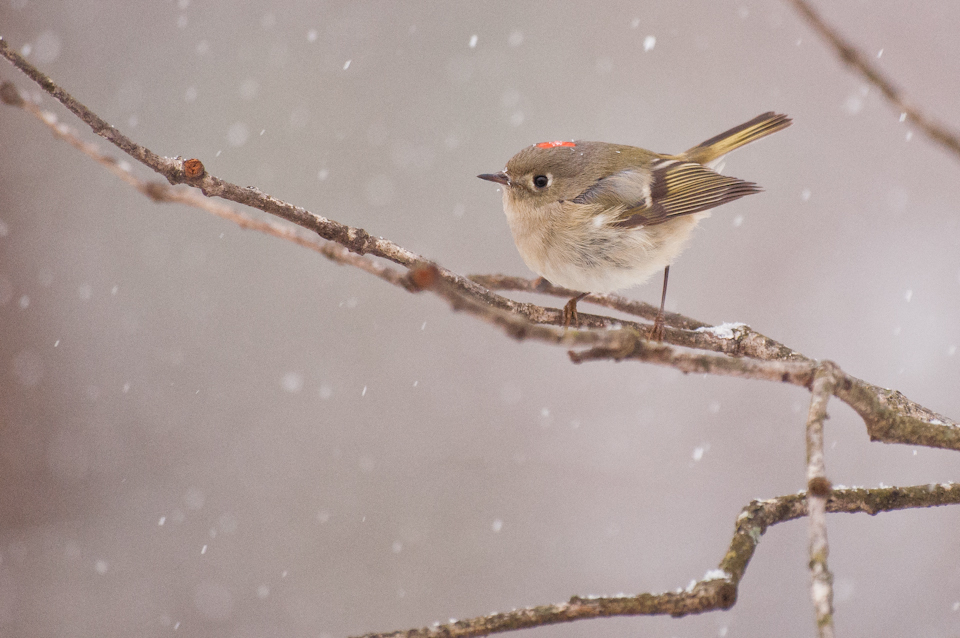
The Ruby-crowned Kinglet is a small songbird with an abundance of energy. It’s striking ruby-colored feathers, for which it is named, are a rare treat for bird watchers patient enough to track a male bird and wait for it to reveal those crimson colors. Only the males have the noted ruby crown.

Tracking these birds is no easy task. They flick their wings quickly and dart through thick foliage searching for the next meal of insects or spiders. The “flicking of the wings” serves as a mean of scaring the bugs out of hiding. When the insects are startled, that’s when the Ruby-crowned Kinglet strikes.

Below is a video that shows you this squatty little bird that looks as if it has no neck. It’s olive and gray colored with bright white rings around its eyes and bright white bars on its wings. This is how most people spot the birds, by looking for the color pattern. The ruby feathers aren’t something you’ll see often. Also, watch for the wing flicking and listen for the male’s loud song and his double noted call.  You’ll hear both in the video.

Ruby-crowned Kinglets migrate back to the far northern areas of the United States and Canada for summer breeding. They are monogamous during the mating season. While the females do most of the work to build the nest, the males gather food. The couples usually have one brood each year. The 4 to 10 eggs are incubated for 12-14 days. Once the eggs hatch, both mom and dad take part in feeding for another 10-15 days then the young birds quickly leave the nest.

Ruby-crowned Kinglets like to breed in tall, dense forests. If you want to attract them, keep in mind, they like spruce, fir, and tamarack. In the winter and during their migration period, they seek out shrubby habitats, deciduous forests, parks, and even trees in the suburbs. In order to make your yard safe for them, you should also avoid insecticide sprays. In addition to the usual diet of spiders, wasps, ants, bark beetles, and many other insects, the Ruby-crowned Kinglet consumes copious amounts of seeds and fruit.

Bird lovers live for the challenge of trying to catch a glimpse of this energetic bird’s elusive and striking red feathers. If you are lucky enough to see a Ruby-crowned Kinglet and get a photo or video like the one shown above by Beth Willis. We love showing your photos to our Cole’s community of backyard birders. The best time to spot one singing is the spring or summer season. So, be on the lookout!

Click below to join the conversation on Facebook.

https://www.facebook.com/pages/Coles-Wild-Bird-Products-Company/125017247634656?ref=hl


Cole’s Wild Bird Products is a family-owned company that distributes wild bird feed and suet products. The company is known for offering the highest quality products on the market. Cole’s also specializes in chili-infused seed products designed to make your feeder a bird’s only “hot” spot. Cole’s started in the garage of mom and pop entrepreneurs Richard and Nancy Cole back in the early 1980’s. Today it distributes to retailers nationwide. Cole’s is located in the metro Atlanta area. For more information, visit www.coleswildbird.com.

What Do You Do When A Bird Flies In?

This hummer wants out!

Many of us who love feeding birds have had the unnerving experience of having a bird fly in to our homes. So, what do you do when it happens? You start by trying to remain calm. Your goal is to help the bird get back outside without it getting too stressed or injured.

Wrens, in particular, are curious birds known to fly into homes. If you do have a wren in your home, just know they are also pretty smart about figuring a way out. The most important thing to keep in mind is that to a bird “up is out.” Loosely translated that means they will always look for a way out in an upward direction – even if they have an open window available down low.  You may have to consider getting the bird to fly away from an upstairs window. Usually though, just leaving the room will give the bird space to find the outside opening on its own,


Here are a few steps to take right away. 

Switch off all fans IMMEDIATELY. Birds often try to escape by flying up towards the ceiling and many die upon coming in contact with fan blades.

If you have cats and dogs, get them out of the area. Either put them in a closed room or outside. This way, they don’t stress or attack the bird.

If the bird is in the kitchen, switch off the stove, hood vent, and any heat-generating appliances that may harm the bird should it collide with the appliance. Cover all pots, pans and kettles that have hot food or liquids in them.

Open all the doors and windows to enable the bird’s escape. Close all doors to other rooms to stop the bird from becoming more confused and flying deeper into the house.

Do not use loud noises, sticks or hard objects to chase the bird out. Use your hands to gently wave, push, pick up or otherwise direct the bird towards and open door or window. A soft net, such as a swimming pool or butterfly net, may be used to catch the bird and get them outside – just be careful and gentle when releasing the bird.

If the bird appears stunned or injured, throw a light towel over the bird and gently pick it up. Inspect the bird for injuries. Injured birds should be brought to a vet for treatment. Birds that are merely stunned can be kept in a shoe box until they recover and are ready to be taken outside and released. Be on the lookout for dogs and cats that may be waiting to pounce on a dazed bird.

Do you have an interesting or funny story about a bird getting into your house? We’d love to hear it! Just email us at webbird@coleswild.com

Click below to join the conversation on Facebook.

Cole’s Is On Facebook

Cole’s Wild Bird Products is a family-owned company that distributes wild bird feed and suet products. The company is known for offering the highest quality products on the market. Cole’s also specializes in chili infused seed products designed to make your feeder a bird’s only “hot” spot. Cole’s started in the garage of mom and pop entrepreneurs Richard and Nancy Cole back in the early 1980’s. Today it distributes to retailers nationwide. Cole’s is located in the metro Atlanta area. For more information, visit www.coleswildbird.com.


Cedar Waxwings are beautiful, social birds that love to eat fruit.

Cedar Waxwings are among the most striking songbirds, easily identified by the black mask on their faces and the bright red tips on their feathers. These red, waxy tips on their feathers and their appetite for cedar berries combine to give them their name. They are about the size of a robin and are usually brown and gray with a beautiful blend of lemon yellow on the tips of their tails and a lighter yellow on their breast.

Cedar Waxwings love to eat fruit. In fact, they can subsist on fruit alone more so than other birds.  If you want to attract them to your yard, it’s a good idea to have lots of berries around. In summer, the best plants to attract them are serviceberries, strawberries, mulberries, dogwood, and raspberries. In winter, you can’t go wrong with cedar berries, mistletoe, madrone, juniper, mountain ash, honeysuckle, crabapple, hawthorn, and Russian olive fruits. The one downside of their fruit rich diet is that they’ve been known to feast on fruit that’s overripe and fermented. Although “drunk” birds can be humorous to watch, in some cases such fruit intoxication can be life threatening. Here’s a video showing intoxicated a bird.

http://www.youtube.com/watch?v=vgefm1ACchA


In summer, Cedar Waxwings have a taste for protein rich insects like mayflies, dragonflies, and stoneflies. They most often catch bugs mid-flight or pick insects such as spruce budworms and leaf beetles right off vegetation.

Cedar Waxwings can be found as far north as Canada and as far south as the northern tip of South America. Many of them migrate to Canada in the summer where they breed, usually one or two broods during a season. They can be found in the southern United States and all the way down to South America in the winter. People in the northern half of the United States have the chance to see them all year round.

These birds are very social and are almost always seen in large flocks. They have a mating ritual that consists of the male offering a gift to his mate. The two will hop toward each other and then away and then back. You may even see them touch bills together during this little tango. The male also likes to pass a gift to his lady friend. It might be a small fruit, a bug, or a flower petal which she will take and then return. This goes on for a while before she eats the gift.

Cedar Waxwings are beautiful, striking birds with a lighthearted song and desire for social interaction. In fact, this video shows just how social these birds can be. Here a woman is holding the nest as a mother Cedar Waxwing feeds her young.

Our Facebook fan Bethany Satterfield Feehery nominated the Cedar Waxwing for Cole’s Bird of the Month. Thanks, Bethany. We hope you will join the conversation on Facebook. Click the link below.


https://www.facebook.com/pages/Coles-Wild-Bird-Products-Company/125017247634656


Cole’s Wild Bird Products is a family-owned company that distributes wild bird feed and suet products. The company is known for offering the highest quality products on the market. Cole’s also specializes in chile infused seed products designed to make your feeder a bird’s only “hot” spot. Cole’s started in the garage of mom and pop entrepreneurs Richard and Nancy Cole back in the early 1980’s. Today it distributes to retailers nationwide. Cole’s is located in the metro Atlanta area. For more information, visit www.coleswildbird.com.

People Have Been Feeding Birds for Centuries

Since February is National Bird Feeding Month, we wanted to share a bit of history about what is now one of America’s top hobbies. As it turns out, humans have been drawn to bird feeding for a very long time. Here are four interesting facts about the history bird feeding.

One) According to naturalist James Fisher, a monk who lived in the sixth century was one of the earliest known bird feeders. Saint Serf of Fife tamed a pigeon by feeding it.

Two) Henry David Thoreau wrote of feeding birds at Walden Pond in 1845. Around the same time period, John James Audubon wrote about feeding hummingbirds in his most famous publication, The Birds of America.

Three) In the harsh winter of 1890-91 in Britain, national newspapers asked people to put out food for birds. In 1910 in the United Kingdom, Punch Magazine declared that feeding birds was a “national pastime”.

Four) In January 1994, Illinois Congressman, John Porter, read a resolution in the Congressional Record declaring February as National Bird Feeding Month.  This observance was established because wintertime is one of the most difficult periods in North American for birds to survive in the wild.

Today, more than 50 million Americans put out a billion pounds of bird feed each year. In fact, according to Wikipedia about one in three adult Americans feed wild birds in their backyards. The relaxing hobby that helps people feel more connected to nature is now known as the second most popular hobby in America. Gardening is listed as the number one hobby.

Learn All About Common Redpolls

Common Redpolls are energetic little songbirds that travel in flocks, burrow in the snow, and thrive in the cold. They make their home in the arctic tundra and boreal forest and can survive temperatures of 65 degrees below zero Fahrenheit.  Since Common Redpolls live in these cold climates and aren’t used to humans, they tolerate people quite well and are very tame. They migrate erratically traveling to Canada and the northern United States depending on food sources. Common Redpolls are always a welcome sight at back yard feeders and have been spotted as far south as Kansas.

They are named Redpolls for their red “caps”. The males have a splash of red on the tops of their heads and a reddish pink blush on their breasts. In the breeding season, the male really stands out as his red becomes more vivid. The females have similar coloring on their heads, but their breasts are duller in color allowing them to better blend in with nature. Both males and females have brown streaking against white feathers on most of their bodies. The coloring is similar to that of the House Finch.

While birch seeds are a staple most of the year, Common Redpolls eat many types of seeds. In addition to their favorites Niger and thistle, they like black oil sunflower seeds. They have small beaks and must eat seeds that are easy to open. In the summer, this colorful bird loves to munch on spiders and insects for some extra protein. It’s a good thing their diet is so varied since they eat as much as 45% of their body weight a day.

You may wonder how these tiny little birds endure the bitter cold temperatures and harsh wind of the arctic tundra. They are resourceful, hearty, and smart. They create tunnels in the snow that help keep them warm. These tunnels can be a foot long and as much as four inches deep. When it gets too cold, several of the birds will sleep huddled closely together in the tunnels and escape the bitter cold wind.

Common Redpolls are also built to be resourceful. They have little pouches in their throats used to store seeds. Sometimes they fill these pouches completely, then fly away to swallow the seeds in a more safe and comfortable place.

Common Redpolls travel in flocks of several hundred birds, so you’ll rarely see just one or two. They have a sharp, buzzy call often heard when they are actively foraging. The oldest known Common Redpoll was 7 years and 10 months old. Not bad for a tiny bird that puts up with the harshest temperatures on the planet! They are truly tough little birds with the ability to make the most of their environment.

Click below to watch a video of a Common Redpoll eating in the wild.


Cole’s Wild Bird Products is a family-owned company that distributes wild bird feed and suet products. The company is known for offering the highest quality products on the market. Cole’s also specializes in chile infused seed products designed to make your feeder a bird’s only “hot” spot. Cole’s started in the garage of mom and pop entrepreneurs Richard and Nancy Cole back in the early 1980’s. Today it distributes to retailers nationwide. Cole’s is located in the metro Atlanta area.


We’d love to hear from you on Facebook fans. Join the conversation at https://www.facebook.com/pages/Coles-Wild-Bird-Products-Company/125017247634656

How Does Cole’s Really Compare?

Terry Allen

Just wanted to share this price comparison with all of our Cole’s Wild Bird Products customers. One of our retailers, Terry Allen, who runs a small shop called For The Birds in Salem, South Carolina recently did his own comparison analysis of Cole’s Blue Ribbon Blend vs. Pennington brand, which is sold at Walmart.

Terry Allen says he always knew Cole’s offered a higher quality product, and he advised customers to try Cole’s and see the difference. But, since some customers were hesitant to spend the extra money, Terry felt the need to illustrate and demonstrate that by buying Cole’s, his customers would save money and enjoy less waste at the feeder.

So, Terry invested in a bag of Pennington’s Classic Wild Bird Feed. He carefully separated each ingredient using various strainers. He broke it down, and here’s what he found. Milo, which is listed as the first ingredient (by law ingredients are listed from the highest percentage to the lowest) and wheat, listed as the third ingredient, make up 75% of the bag.

Screen-shot-2013-12-02-at-11.37.27-AM.png


Here’s how milo is described on About.com. “Milo is often used as a filler in bulk commercial seed mixes, and much of the seed will be wasted. Milo has poor nutritional value and very few birds will eat it, though it is a favorite food for doves, wild turkeys and pheasants.” So, if you want to attract songbirds, filling your feeders with milo isn’t a good idea. The birds will kick it out of the feeder and leave a mess in your yard.

As you can see from the illustrations, Allen found that millet makes up 20% of the bag, and sunflower seeds make up just 5%. Again, three quarters of the bag is filled with milo and wheat .


The last illustration is the most compelling. Allen found that you’d have to purchase four bags of Pennington’s Classic Wild Bird Feed from Walmart at a total cost of $29.68 to get the same amount of nutritional seed you are getting in one ten pound bag of Cole’s Blue Ribbon Blend at $24.00. With Cole’s you save more than $5.00. You miss out on the mess under your feeders, and you miss out on lugging around three ten pound bags. So, where’s the real value? Allen loves showing his customers what counts, and he says they keep coming back again and again for Cole’s.


Cole’s Wild Bird Products is a family-owned company that distributes wild bird feed and suet products. The company is known for offering the highest quality products on the market. Cole’s also specializes in chili infused seed products designed to make your feeder a bird’s only “hot” spot. Cole’s started in the garage of mom and pop entrepreneurs Richard and Nancy Cole back in the early 1980’s. Today it distributes to retailers nationwide. Cole’s is located in the metro Atlanta area. For more information, visit www.coleswildbird.com
Screen-shot-2013-11-05-at-3.43.25-PM.png


Juncos: Cole’s Bird of the Month For January | Cole’s Wild Bird Feed

When one thinks of winter birds, juncos usually come to mind. The term is actually used for several subspecies including Slate-colored Juncos, White-winged Juncos, Oregon Juncos, Pink-sided Juncos, Gray-headed Juncos, Red-backed Juncos, and Guadalupe Juncos. As you can tell, the various types of juncos are named for their territory or their coloring

The Dark-eyed Junco is the best known and most common of the species. These birds can be easily spotted as they have gray or brownish heads, necks, and breasts with similar colored wings. They have a distinguishing white belly and white feathers in their tails.

While a small year-round resident population does exist in many northeastern states and some northwestern states, most of the country sees them mainly during the winter months starting in October. By March, they usually migrate back to their summer homes in the northern Unites States and Canada to breed.

Dark-eyed Juncos love forest areas as well as residential back yards. They are often seen at bird feeders or on the ground under feeders. In fact, they are known as one of the most common songbirds at backyard feeders. They especially like insects and seeds.

If good looks draw your attention, then you will find the Slate-colored Junco especially striking. The male stands out with his mostly black body contrasting beautifully against his white belly and white tail feathers. The female Slate colored Junco is more of a brownish gray. She also has some white tail feathers mixed in with her brown ones.

Scientists at the National Science Foundation have been studying juncos for decades. These “snowbirds” as they are sometimes called, give new insight into adaptability and breeding. Various types of juncos are found all around the world from isolated and remote areas like an island two hundred miles off the coast of Mexico to Wyoming’s Grand Tetons and the Highlands of Guatemala. They are studied for their ability to evolve quickly and adapt to the many varied climates and habitats where they are found.

For most of us, juncos are less about science and more about enjoyment. They are simply friendly, cute birds we look forward to seeing at our feeders in winter. For more information on Dark-eyed Juncos, visit http://www.allaboutbirds.org/guide/dark-eyed_junco/id. Thanks to our Facebook fan Angie Jenkins who calls juncos “our snowy birds”. She nominated juncos as the Cole’s Bird of the Month for January. We’d love to hear from more Facebook fans. Join the conversation at https://www.facebook.com/pages/Coles-Wild-Bird-Products-Company/125017247634656.

Learn about Turtle Doves

European Turtle Doves have long been a symbol of Christmas holiday celebrations. Best known for the song, “The Twelve Days of Christmas,” the turtle dove’s first connection to the Christian holiday actually dates back to the birth of Jesus as depicted in the Bible.

Representing innocence, purity and enduring love, turtle dove lore throughout the ages is well documented in such noted authors’ works as William Shakespeare. In his famous poem about the death of ideal love, “The Phoenix and the Turtle,” the title isn’t named for the reptile, but for the turtle dove instead.

While turtle dove imagery is featured prominently in books, poems and songs, the general term “turtle dove” does not actually refer to any one specific bird, but rather a group of Old World doves including the Mourning Dove, Ringed Turtle Dove, and most specifically the European Turtle Dove. Here in the United States  you are most likely to see the Mourning Dove and the Ringed Turtle Dove in your back yard depending on where you live.

A distinctive band of color on the top of the neck makes it look like the dove is capable of drawing its head into the neck, like a turtle – hence the term turtle dove. European Turtle Doves are light gray to brown with black spotting on their wings and white tail feathers. A typical adult male turtle dove has bright pink patches on the sides of his neck with a light pink coloring that reaches his breast. The crown of the adult male turtle dove is very distinguishable because of its bluish-gray color. While females are similar in appearance, they have more brown in their feathers and are a bit smaller in size. Juvenile turtle doves look striking like adult females only darker in color.

This graceful bird has an interesting mating ritual. The male begins by flying and gliding with his wings outstretched and head down. After he lands, the male will approach the female with a puffed out chest, bobbing his head, calling out loud. Their mating call sounds like “coooo-woo-woo-woooo” and is often mistaken for an owl. If the female is impressed by the male’s performance, she consents to a romantic grooming of each other’s feathers.

Once the two get together they form a strong pair bond that can last several breeding seasons. Like most birds, they prefer to nest in trees, but unlike most birds they are not averse to nesting on the ground should no suitable trees be available. Interestingly, both parents take part in the incubation process. These birds are dedicated to being parents and rarely leave the nests unprotected. If by any chance a predator discovers the nest, one parent will usually employ the quintessential decoy maneuver by pretending its wing is broken – fluttering around as if injured only to fly away when the predator approaches it.

Compared to other songbirds, their diet is a bit bland. European Turtle Doves are not huge fans of snails or insects instead preferring to munch on seeds such as canola, millet, safflower, and sunflower.  They will even eat a bit of gravel or sand from time to time to help with digestion. Though they love to visit bird feeders, they are most often seen foraging for food on the ground. Whether it’s up on the feeder or down on the ground, they are always pleasant to watch.

Known for their gentle nature and lasting bonds, European Turtle Doves are the perfect symbol for all things Christmas. That’s why they are Cole’s Bird of the Month for December.

Five Facts about Turkeys

Turkeys Can Fly

Turkey Are Missing From The First Thanksgiving

According to the Washington Post, there is no proof that turkey was on the dinner table during that famous feast of 1621. Historical documents do reveal the mention of deer and fowl, but no specific bird is named. William Bradford, who served as governor of Plymouth Colony, mentioned “wild turkeys” in a letter. But, no one cites turkey on the menu that day.  President George Washington made Thanksgiving a national holiday in 1789. President Lincoln moved the holiday from November 26th to the fourth Thursday of November in 1863. Turkey became a popular dish for Thanksgiving only after a magazine editor wrote a recipe for turkey and dressing in the mid 1800’s.

Turkeys Are Hunters

Did you know turkeys are omnivorous creatures, meaning their diet includes a wide range of food, from both animal and plants.  Wild turkeys will munch on acorns, berries, small reptiles, snakes, frogs, salamanders, large insects, snails, slugs, and worms. They will also indulge in sand and gravel for grit. Commercially raised turkeys are the types that are usually sold for food. Those turkeys are likely to be fed very specific grains, and some graze on weeds and grasses.

Turkeys Snooze Up In The Air

Turkeys are large and heavy birds, so you might assume they prefer hanging out on the ground. However, turkeys like to perch on top of tree branches when they snooze. This helps to keep them safe from predators like coyotes, foxes, and even raccoons. Turkeys usually sleep in flocks, and when it’s time to wake up, they call out to the rest of the group to make sure their fellow turkey buddies made it through the night in one piece before coming down.

Wild Turkeys Are Speedy

Turkeys, despite their size, can fly and they can reach speeds of up to 55 miles per hour. They usually fly low to the ground because they find food while on the ground. But, they can fly short distances quickly. Domesticated turkeys, those raised for food, have become so “fattened up” that they have lost the ability to fly.

Turkeys Have Two Stomachs

One is called the glandular stomach. This is where food is softened and broken down. The broken down food then enters the turkey’s gizzard. The gizzard has tiny stones that turkeys typically swallow. These stones are called gastroliths and help with breaking down food for digestion because turkeys don’t have teeth. A turkey’s gizzard is very muscular and turns the food  into mulch before sending it to the intestines.  Sometimes food can be moved back into the glandular stomach, if more digestion is necessary.

Turkeys are fascinating birds with the ability to sleep in trees, hunt animals,  and protect the flock. This Thanksgiving, remember and share these five fun facts about your feathered friends.

Honeyguides know about the birds and the bees

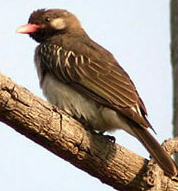
Honeyguide

Ever want to find a honeycomb? Look no further than your friendly Honeyguides. Honeyguides are also known as indicator birds or honey birds because they have a tendency to lead humans directly to bee colonies. The Honeyguides use their demanding call to lead humans through forests and directly to bee hives. Of course there’s a selfish motive involved – once humans take the honey, these birds feast on the grubs and beeswax in the nests. The diet of the Honeyguide is wide ranging. In addition to the fruits of the honeycomb, these birds eat all types of larvae and flying insects. They will also eat spiders and fruits.

They are usually dull-colored (brownish and greenish), while some do have bright yellow coloring in the plumage. They all have light outer tail feathers, small heads with short bills and raised nostrils. Their actual size varies from 10-20 centimeters. These birds have strong legs and toes for clinging to tree barks. Their wings are long, narrow, and pointed to allow vigorous flying and impressive maneuvering.

Honeyguides are typically found in Sub-Saharan Africa and southern Asia. They love to inhabit forests and woodland areas as well as the tree-line areas in the mountains. As far as migration, Honeyguides are known to be stable residents that may remain in the same area for as long as a year.

Honeyguides have an interesting egg laying process. For starters, they like to use the nests of other birds for their eggs. They usually drop their eggs in other host nests, so that their eggs will hatch along with the host’s eggs. Timing is everything if they want to be successful. Female Honeyguides can be in danger if the hosts notice that they are invading their nests. Typically, the female has 10-15 seconds to lay an egg and leave. Females can lay as many as 20 eggs in a season.

These birds are extremely resourceful and intelligent. From the way they assist their human counterparts for a meal to their daring egg laying practices, Honeyguides are intriguing creatures.


House Finch

Male House Finch

Originally a native of Mexico and the southwestern parts of America, the House Finch is a fairly new bird to eastern North America. In the 1940’s, a couple of risk-taking pet store owners from New York brought them to the United States and started selling them in violation of the Migratory Bird Treaty Act of 1918. Once they knew they were about to be busted, they released the birds into the New York skies. At the time, many people referred to them as “Hollywood Finches” because of their west coast origin.

This new found freedom allowed the House Finch to create new habitats in deforested areas across the eastern United States. Outside of breeding season, they are very social creatures that are rarely seen alone. It is not unusual to see them crossing the skies in a large flock with their feathered friends.

If you are on the look-out for a House Finch, here are some things that may help:

They are usually identified by their small bodies, fairly large beaks, and long, flat heads. They have short wings, but sport a beautifully notched, long tail. Typically, the adult male House Finch is rosy red around their face and upper chest. Their back, belly, and tail all have a brown streak.

One interesting note: the diet of House Finches can affect their appearance, specifically males, making them look very different from one another. According to Cornell University, the pigments in food cause the color variations from yellow to orange to red.  For instance, in Hawaii where the natural diet is low in carotenoids, the birds tend to be yellow. The presence of betacarotene in the diet will cause a more orange color. And, in the east, where ornamental fruits are rich in another type of carotenoid, known as echineone, the birds are red.

On the other hand, the female adults are dull in color. They are grayish-brown with fuzzy streaks and a modestly marked face. During courtship, males sometimes feed females. This begins with the female gently pecking at his bill and fluttering her wings. The male then regurgitates food to the female a few times before actually feeding her. What a way to romantically spoil a lady bird, huh?

When it comes to eating, House Finches are pretty outgoing little birds that collect food at feeders. They like to be perched high in nearby trees to keep an eye out for potential food and potential predators. If there aren’t any feeders in sight, they feed on the ground, on stalks, or in trees. These birds enjoy natural foods such as wild mustard seeds, knotweed, mulberry, poison oak, and cactus. Their preferred fruits are cherries, apricots, peaches, pears, plums, strawberries, and blackberries. If you want to attract them to your feeder, be sure to include black oil sunflower seeds and white proso millet.

When they are not in their native habitats, such as deserts, grasslands, and open woods, they prefer to occupy city parks, backyards, urban areas, farms, and forests across the United States.

House Finches have a unique twittering song that they like to sing. The male House Finches sing a long, jumbled tune that is made up of short notes. They often end with an upward or downward slur. Females sing a shorter, simpler version of this song. Male and female House Finch calls sound like a sharp “cheep”. If you would like to hear the call of a male House Finch, click here http://www.allaboutbirds.org/guide/house_finch/sounds. They usually call out when perched or while flying.

The House Finch is a favorite at the feeder. They are good natured social birds with a strong appetite and an upbeat tune.  These birds have come a long way and endured an odd introduction to this country. So, please help them feel at home.

Birds Stage a Sit In

What happened to my Cole’s?

One of our awesome Cole’s customers wrote to us to let us know how unhappy her birds became after she began stretching out the time between feeder refills. We thought this was so funny that we wanted to share her story with all of you. Please share your thoughts and your stories with us as well. We love this stuff! The message below was sent to us by Becky Falkin of Kennesaw, Georgia. We decided that filling our bird feeder every two days is not part of the Falkins’ family budget. So, we’re spacing out our Cole’s birdseed refills. The birds are not taking to this rationing too well. In fact, last night this little fellow decided to express his frustration by having a “sit in”. He stared at us all through dinner. If looks could kill, we would be dead.

He looked quite proud when some other friends joined the protest. We so appreciate Becky sharing these photos and this story with us. We know the birds LOVE Cole’s. Just to let you know, Becky wrote back to let us know, the birds won. Here’s what she told us.

Since we’re studying birds this year for science (we homeschool), we’re back to refilling the feeder frequently–we decided to incorporate it into our homeschool budget, so no more angry bird sit-ins as of late! 
 

Awe, What A Cute Window Shopper!

Imagine seeing this adorable little customer looking in your store window. That’s what happened to long time employee Karen Theodorou as she was closing up shop at the Birdwatcher Supply Store in Buford, one of the retail outlets for Cole’s Wild Bird Products. Karen says she had just closed out the register around 6:30 on July 13th and was headed for the door when she looked up and saw what appeared to be a curious pooch. She looked closer and realized it was actually a little fawn all alone at the door. Karen sat all her things down and grabbed her cell phone to take a picture. “He couldn’t see me because of the reflective glass. So, I snapped a few photos,” Karen said.

The store is located in front of a large forested wetlands area. So, employees are used to seeing wildlife such as deer, rabbits, and hawks behind the store. Karen assumed this little fawn came from the back and had wandered to the front of the store, where it could run into potential danger. “He was right in front of a busy shopping area, and the street isn’t far away. So, I wanted to make sure he would head in the right direction, back to the woods and his mother. He saw the reflection in the glass and hit the store window. I went outside, and he ran toward the store next door and fell on the wet sidewalk. But, he got up quickly. I followed him to make sure he headed in the correct direction, back to the woods,” said Karen.

As soon as Karen got home, she went straight for Google to find out why this little fawn might be without his mom. She found out that fawns are commonly seen away from their moms. There’s a very good reason for that. It’s nature’s way of keeping the fawns safe from predators. It seems the fawns don’t have a strong scent, but their mothers do. So initially, mom stays with the fawn just enough so that it can nurse. By one month old, the fawn begins foraging for food and by three months old, it is weened. If you’d like to read more about fawns, please check out the article below.

Wild fawns aren’t adoptable!

Here’s a photo of Karen Theodorou as she is banding hummingbirds. She describes herself as “a nature nut”. Thanks, Karen! Please share this story with friends. And, join Cole’s on Facebook.

Coles Wild Bird Products


530525_159657544158011_169443176_n
Karen Theodorou


The Rufous Hummingbird: Cole’s Bird of the Month for August

The Rufous hummingbird packs quite a punch in its little body. It’s known for having a feisty nature and a brave determination to protect favorite feeders and flowers.  Rufous hummingbirds will chase away much larger hummingbirds and even chipmunks and other small animals.

The male Rufous has bright orange on his back and belly, as well as a stunning red coat, making him easy to spot and identify. The female Rufous is green with a mostly white neck. A bright orange spot on her throat is the female’s most distinguishing feature. Both males and females move in a dart-like fashion with precise maneuverability.

In addition to a feisty nature, Rufous hummingbirds are also known for their stamina. They have the longest migration, as measured by body size, of any bird in the world! They travel almost four thousand miles making the one way trek from Alaska to Mexico. In case you’re wondering, that equates to more than 78 million body lengths for the three inch hummer. It’s closest competitor, the 13-inch-long Arctic Tern’s one-way flight of almost twelve thousand miles, is a little more than 50 million body lengths.

The Rufous breeds farther north than any other hummingbird in the United States, traveling all the way up to Alaska in the summer. For a little rest and relaxation they then head down to sunny Mexico for fall and winter. Many people along the Pacific Northwest look forward to seeing the Rufous as these mighty little birds make the long migration up and down the western United States.

Additionally, they have a great sense for location, which comes in handy when looking for food on a daily basis. They can remember exactly where a specific feeder was a year ago, even if it has been moved. The typical habitats for these birds are open areas, such as yards, parks, and forests.

Along with visiting feeders, Rufous hummingbirds enjoy feasting on colorful tubular flowers, such as scarlet gilia, mints, lilies, fireweeds, currants, and heaths. To get the protein they need to survive, they eat insects like gnats, midges, and flies. They’ll live in gardens for a while, but move on fairly quickly after one or two weeks. To take good care of these amazing birds, you should make sugar water mixtures on a one to four mixture (one cup of sugar for four cups of water). Be sure to do away with the sugar water if it becomes cloudy or the feeder fills with insects because the spoiled nectar can ferment producing a toxic alcohol.

If you hear a hard ticking sound or a clicking tik or chik that is doubled like ch-tik or ch-ti-tik, there is a Rufous nearby. The adult male will also make a buzzing sound with its wings to draw attention to itself. They make a ch-ch-ch-ch-chi sound, which is very similar to a stutter. Interestingly, immature males do not make any noise or typical sounds at all while they are diving.

When it comes to tough little birds, with lots of aggression and a will to fight for food, you can’t beat the Rufous hummingbird. If you want to see a female Rufous fiercely defending her feeder with everything she has including her quick moves, fanned out tail feathers and quirky sounds – just click on this video and stand back!